
Nickel Alloy Flange Manufacturer
When a Bill of Materials specifies a nickel alloy grade, the wrong supplier can stall an entire project. Procurement engineers in chemical processing, oil and gas, marine, and pharmaceutical manufacturing know the failure modes: a flange that arrives without verifiable material traceability, a grade substitution that compromises corrosion resistance, or a lead time that misses a turnaround window. MFC Flange is an ISO-9001-certified nickel alloy flange manufacturer, and we address each of those risks at the source by forging, machining, and heat treating every flange under one roof at our facility in Sealy, Texas.
Our nickel alloy flanges are specified where standard austenitic stainless steel cannot meet the corrosion or thermal demands of the application. High-nickel grades, including Hastelloy (C276), Inconel (A625), and Monel (A400), deliver outstanding performance in hydrochloric acid, high-pressure oxidizers, and extreme-temperature service. For applications requiring commercially pure nickel, Nickel 200 (UNS N02200) offers excellent resistance to caustic alkalis and reducing environments, while Nickel 201 (UNS N02201) is the low-carbon variant preferred for sustained service above 600°F, where it resists the graphitization and embrittlement that affects Nickel 200 at elevated temperatures. Selecting between the two comes down to operating temperature, and our team confirms the grade’s suitability for your service conditions before production begins.
Why Engineers Specify Nickel Alloy Flanges
Nickel alloys earn their place in a piping system through properties that standard grades cannot match. They resist corrosion in aggressive media, retain high-temperature strength well beyond the limits of 300 Series stainless and duplex steel, and, in certain alloys, exhibit shape-memory characteristics valuable in specialized service. These attributes make nickel alloy flanges the default specification in defense, power generation, petrochemical, and transportation systems where component failure is not an acceptable outcome.
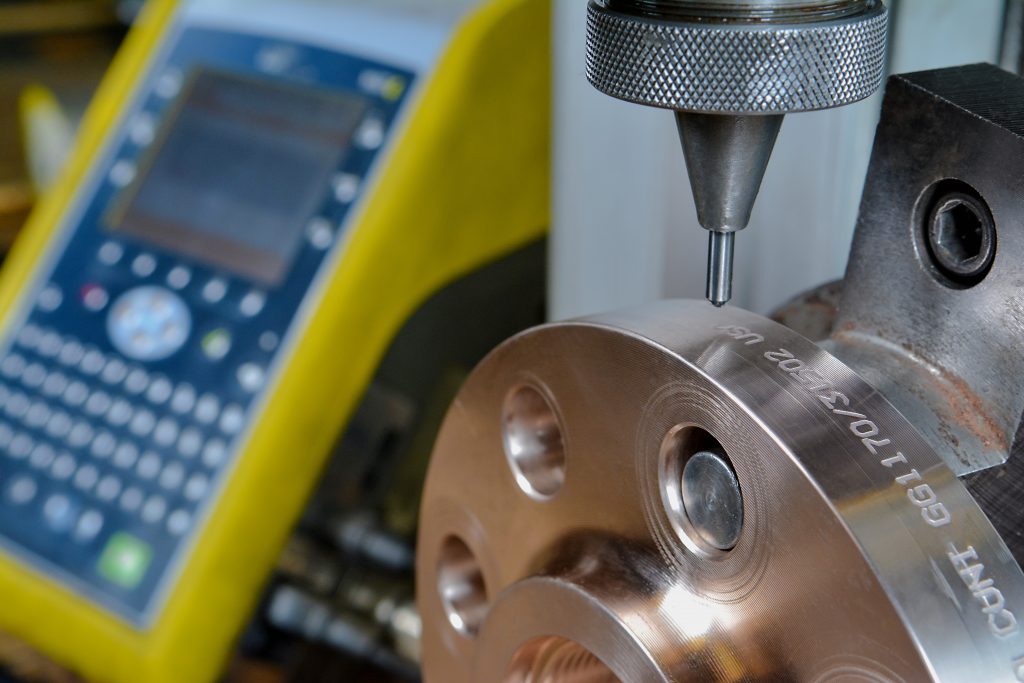
The practical concern for a specifying engineer is not whether nickel performs, but whether the delivered material matches what was ordered. That is where documentation separates a reliable nickel alloy flange supplier from a broker. MFC Flange performs in-house Positive Material Identification (PMI) on our products, giving customers verifiable confirmation that the material shipped matches the specification on the purchase order. Our testing capabilities include tensile testing, Charpy impact testing, and hardness testing (BHN), with full traceability maintained through our ISO 9001 quality system.
Certifications That Support Compliant Procurement
For engineers sourcing into regulated sectors, certification is not a selling point; it is a gating requirement. Our facility holds ISO 9001:2015 and PED certifications, and we manufacture to ANSI, ASME, ASTM, DIN EN, and PED specifications. Our inventory is 100% domestic and DFARS-compliant, and AIS- and BABA-ready for federally funded infrastructure projects. We are approved across nearly all major Approved Manufacturer Lists (AMLs) and hold Canadian Registration Numbers across multiple provinces, supporting procurement in both the U.S. and Canadian markets. Certifications are available for review and can be provided as part of project documentation packages.
The industries we serve, from chemical processing to power generation, share a common standard: documented evidence over assurances. That principle governs how we manufacture and how we document every order.
Forged Flanges Built to ANSI & ASME Standards
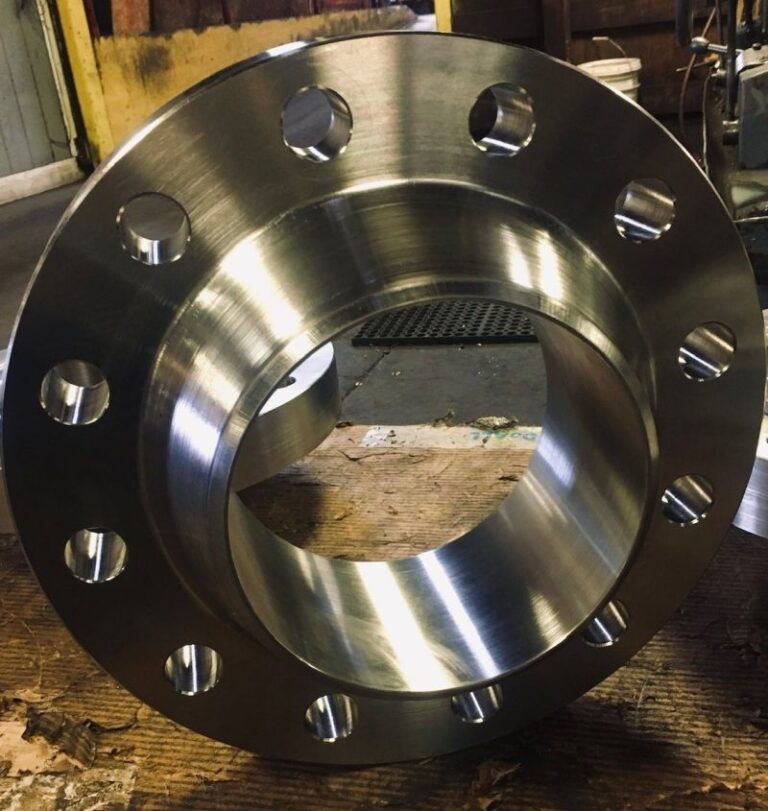
Forging is what gives a flange its mechanical integrity. Our nickel alloy forged flanges are produced through controlled forging rather than cast from plate, which aligns the grain structure and eliminates the porosity that can compromise a cast component under pressure. As a fully integrated forging facility, we cut, forge, machine, and heat treat in sequence, maintaining total control over every stage of manufacture.
We produce nickel alloy flanges to ASME B16.5 (pipe flanges and flanged fittings) and ASME B16.36 (orifice flanges), with DIN EN 1092 available for international specifications. Every flange meets the requirements for pressure and temperature ratings, dimensions, tolerances, marking, and testing defined by the applicable standard. Available flange types span the full range procurement teams require: weld-neck, blind, slip-on, orifice, lap-joint, socket-weld, and threaded.
You can review the complete range of grades and flange types on our commodity flanges page, or compare nickel against our other material families on the materials overview.
Request A Quote
Whether you need a single quick-turn piece for an urgent project or a volume order for a stocking program, MFC Flange has the forging assets and material inventory to deliver. To confirm grade availability, pressure class, and lead time for your nickel alloy flange requirement contact us or request a quote today.
Frequently Asked Questions
When should I specify a nickel alloy flange instead of stainless steel?
Specify nickel alloy when the service conditions exceed what 300 Series stainless steel can withstand. Standard austenitic stainless performs well against general corrosion and moderate temperatures, but it loses strength and corrosion resistance in concentrated acids, high-chloride environments, and sustained high-temperature service. Nickel grades retain mechanical strength and corrosion resistance under those conditions, which is why they are specified for chemical processing, marine, and power generation systems where stainless would fail prematurely. If your application involves reducing acids, caustic alkalis, or temperatures beyond the limits of stainless, a nickel alloy flange is the appropriate selection. Our team can confirm grade suitability against your specific media and operating temperature.
What is the lead time and minimum order quantity for nickel alloy flanges?
We supply nickel alloy flanges in any quantity, from a single piece for a quick-turn project to volume orders for a stocking program. Because we forge, heat treat, and machine in-house at our Sealy, Texas facility, we control scheduling at every stage and can accommodate urgent delivery requirements that brokers relying on outside production cannot. Lead time depends on grade, flange type, pressure class, and current material inventory. To confirm availability and a firm delivery date for your requirement, contact our team with your specifications.
Are nickel alloy flanges difficult to weld and machine?
Nickel alloys require more controlled fabrication than stainless steel because they work-harden during machining and need matched filler metals during welding to preserve corrosion resistance. These properties are managed through correct procedure, not avoided, and they are one reason a documented, in-house manufacturing process matters. We machine nickel alloy flanges with the speeds, tooling, and heat treatment each grade requires, and we verify the finished material through in-house Positive Material Identification and mechanical testing before shipment. The result is a flange that meets dimensional and metallurgical specifications without the variability that comes from uncontrolled outside processing.